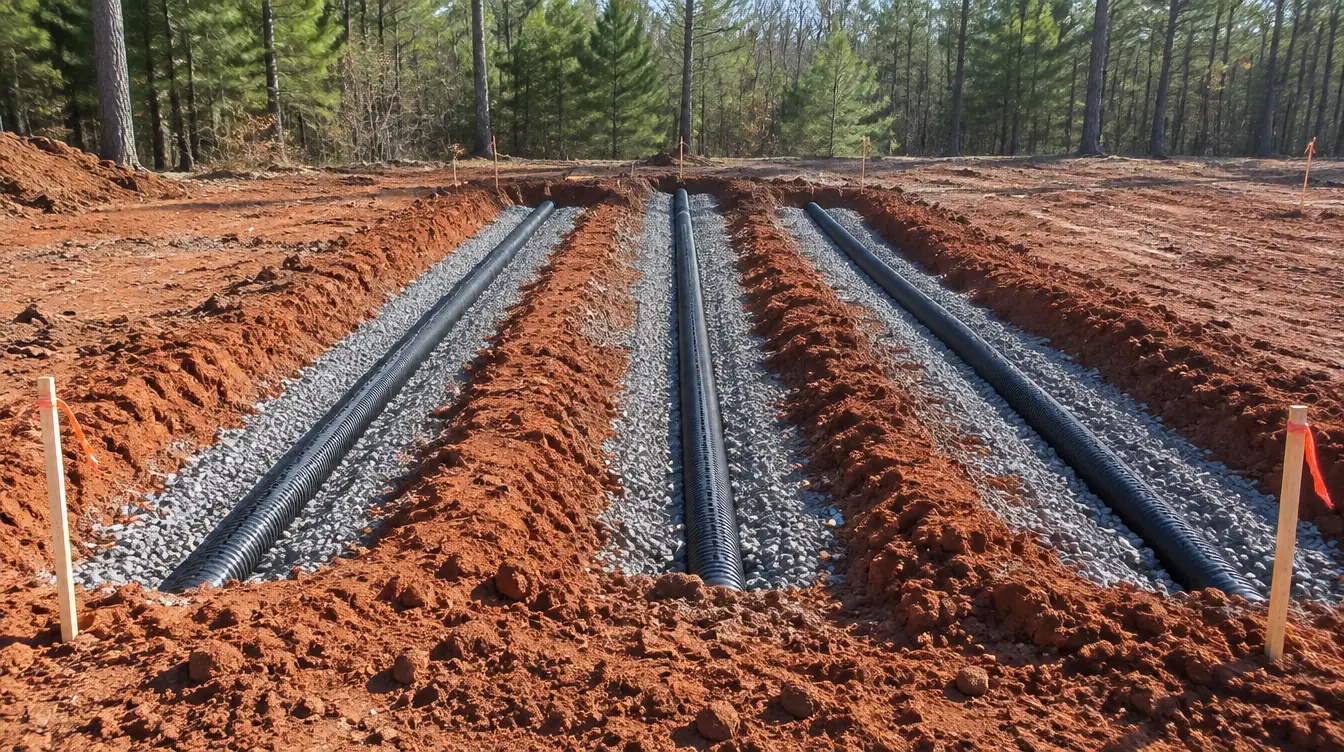
Signs your drain field is failing
- Inside the houseSlow drains everywhere at once, gurgling, or sewage backing up into the lowest fixtures.
- Over the fieldStanding water, soggy ground, or grass that stays bright green and spongy even in dry weather.
- Around the yardSewage odors near the tank or field, or system parts that have worked their way up to the surface.
If the alarm is going off or sewage is coming into the house right now, start with our septic emergency guide.
Why drain fields fail
Most failures trace back to maintenance. When a tank goes too long without pumping, solids wash out into the drain field and clog the soil. Broken tees or baffles do the same thing. Other common causes are a house that has outgrown its system (a three-bedroom system serving a house full of people), soil compacted by vehicles or equipment, tree roots, and sites with poor soil, steep slopes, or a high water table.
Can a drain field be repaired, or does it need replacing?
It depends on what failed. A broken baffle, a clogged pipe, or a dead pump is a repair. A drain field whose soil has sealed over is usually a replacement. Any honest operator will diagnose before quoting a new field, because replacement is a major job.
EPA figures. In the Upstate, the system your soil requires today drives the number, and on a tight or clay lot that can mean an alternative design. See the septic cost guide for what moves the price.
Do you need a permit to repair a drain field in South Carolina?
- Notify SCDES firstBefore relocating or replacing a septic system or any of its parts, the owner has to notify SCDES, which decides whether a permit to construct and approval to operate are required.
- Sewer available?South Carolina does not allow a failing system to be repaired or replaced where public sewer is accessible for connection. The fix is connecting to sewer.
- Tight lot?When a site cannot meet current rules, SCDES can consider a written variance request case by case. A complete request is processed within three business days.
- Repair areaNewer systems were permitted with room set aside for a future repair field (at least half the size of the system), which is where a replacement usually goes.
- Who can do the workRepairs are done by SCDES-licensed installers at the Tier 2 or Tier 3 level. Homeowners may work on the system at their own home without a license, but the notice and permit rules still apply.

Help paying for it
The state does not fund homeowner repairs, and once a failing system is reported, SCDES requires the owner to fix it. Low-income rural homeowners may qualify for USDA Section 504 home repair loans of up to $20,000, and grants of up to $7,500 for very-low-income owners, which can cover septic hazards.
Questions people ask
What are the signs of a failing drain field?
Slow drains throughout the house, gurgling, sewage odors, standing water or soggy ground over the field, and grass over the field that stays bright green and spongy even in dry weather. Sewage backing up into the house is the most obvious one.
Do I need a permit to repair a drain field in South Carolina?
You have to notify SCDES before relocating or replacing a septic system or its parts, and SCDES decides whether a permit is required. When it is, the permit to construct and approval to operate work the same way as for a new system.
How much does drain field replacement cost?
The EPA puts repair or replacement of a malfunctioning conventional system at $5,000 to $15,000, with alternative systems costing more. In the Upstate, the system your soil requires today is the biggest factor.
Can I repair my septic system if sewer is available?
Generally no. South Carolina does not allow repair or replacement of a failing septic system where public sewer is accessible for connection. In that case the fix is connecting to sewer.
Do septic additives fix a failing drain field?
No. SCDES says additives are not needed and may do more harm than good.
Is there help paying for a septic repair?
SCDES does not fund homeowner repairs. Low-income rural homeowners may qualify for USDA Section 504 home repair loans of up to $20,000, and grants of up to $7,500 for very-low-income owners, which can cover septic hazards.
Soggy yard, slow drains, or a field that needs replacing? Request a quote from a licensed local installer.
Request a quoteSources
We check state and county rules against the source. Rules change, so confirm with the office that issues the permit before you act.
- EPA: Resolving septic system malfunctions
- SCDES: Backups, leaks and odors
- Clemson HGIC 1897: Septic failures
- SC Regulation 61-56, Onsite Wastewater Systems
- EPA: Why maintain your septic system
- EPA: Funding for septic systems
- SCDES: Septic tank frequently asked questions
- SCDES: Licensing for septic installers and pumpers