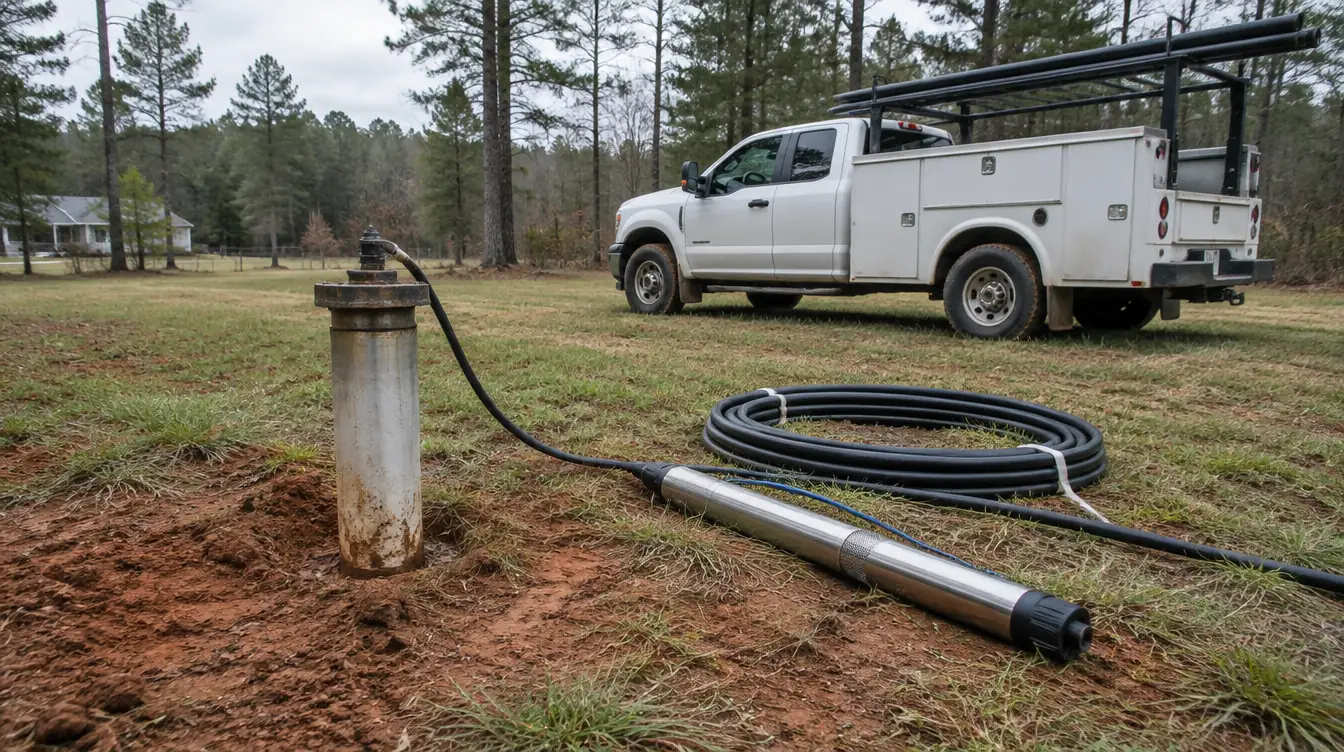
Signs the pump is failing
- No water at allCheck the breaker first. If power is fine, the pump, the pressure switch, or the wiring down the well are the usual suspects.
- Pressure drops and surgesWeak or uneven pressure at the taps.
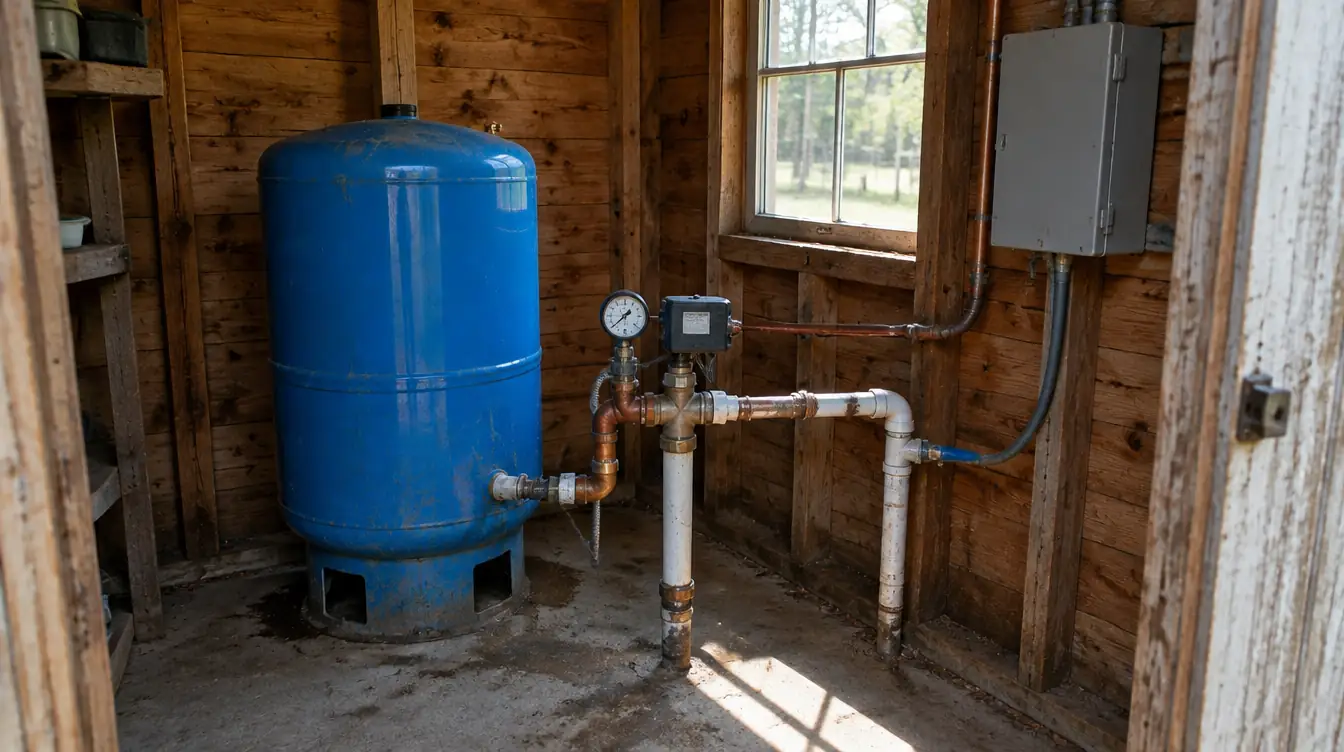
- Short cyclingThe pump clicking on and off every time water runs. This is often a waterlogged pressure tank, not the pump.
- Changes in the waterSudden changes in taste, smell, or cloudiness, or sand coming through.
Pump or pressure tank?
The pump makes the pressure and the tank stores a reserve so the pump does not have to run every time you open a tap. When the tank loses its air charge, the pump starts running nearly every time water is used. That is short cycling, and it can be a tank fix rather than a new pump. A bigger tank will not fix a pump that is too small, though.
Jet pump or submersible?
- Shallow-well jet pumpSits above ground and pulls water up from less than about 25 feet.
- Deep-well jet pumpAbove ground, for water roughly 25 to 250 feet down.
- Submersible pumpSits down in the well below the water level and pushes water up. Higher pressure and yield than a jet pump.
What a replacement costs
Rough national ranges from industry pricing sources, not a local rate card. Well depth, horsepower, and what else needs replacing (pipe, wiring, pressure switch, tank) move the number. Pump replacements are typically a same-week job in this market, though parts and schedules vary.
Who can do the work
South Carolina licenses well drillers through the state Environmental Certification Board, and the state rules define well maintenance and repair as well driller work. There is no separate pump installer license. Ask for the well driller license number before the work starts. Homeowners working on their own well for their own use are exempt from the licensing rule.
The step people skip: disinfect and test
South Carolina well standards require a well to be disinfected after any pump repair or pump installation: a strong chlorine solution held in the well for at least four hours, then flushed out. After that, test the water. SCDES suggests testing 7 to 10 days after disinfection, and the CDC recommends testing any time part of the well system is repaired or replaced.
Water testing options and the rest of the well rules are in our well drilling and pump service guide.
Questions people ask
How do I know if my well pump is going bad?
No water at all, pressure that drops and surges, the pump clicking on and off constantly, or water that suddenly looks, smells, or tastes different. Constant cycling often points to the pressure tank rather than the pump itself.
How much does a well pump replacement cost?
It depends on the pump type, horsepower, and how deep the well is. As a rough national range from industry pricing sources: jet pumps run about $400 to $1,400 installed, submersible pumps about $1,000 to $2,500, and constant-pressure systems more. A local quote after someone looks at the well is the real number.
Does the well have to be disinfected after a pump replacement?
Yes. South Carolina well standards require a well to be disinfected after pump repair or pump installation, with a strong chlorine solution left in the well for at least four hours before it is flushed. Then test the water.
Who can replace a well pump in South Carolina?
South Carolina licenses well drillers through the state Environmental Certification Board, and the state rules treat well maintenance and repair as well driller work. There is no separate pump installer license. Ask for the well driller license number before work starts.
Do I need a permit to replace a well pump?
The state permit and notice rules cover drilling a new or replacement well. We found no permit requirement for replacing just the pump, but the disinfection rule still applies.
Should I test my well water after the pump is replaced?
Yes. The CDC recommends testing whenever any part of the well system is repaired or replaced, and at least once a year for bacteria. SCDES suggests testing 7 to 10 days after the well is disinfected.
Dry taps, weak pressure, or a pump that will not quit cycling? Request a quote from a local well contractor.
Request a quoteSources
We check state and county rules against the source. Rules change, so confirm with the office that issues the permit before you act.
- SC Regulation 61-71, Well Standards
- SC Regulation 61-44, Individual Residential Well and Irrigation Well Permitting
- SC Code Title 40, Chapter 23: Environmental certification (well drillers)
- SC LLR: Environmental Certification Board (well drillers)
- NGWA wellowner.org: Well owner maintenance practices
- NGWA wellowner.org: Water pressure
- University of Nebraska Extension G2152: Private water wells and pumps
- American Home Shield: Well pump replacement cost (industry pricing, citing HomeGuide)
- CDC: Guidelines for testing well water
- SCDES: Well water testing services