How a septic installation works in Greenville County
Apply for the permit
The application (form D-1740) goes to the South Carolina Department of Environmental Services through its online ePermitting portal, with a copy of your plat or deed and the $150 site evaluation fee.
Site and soil evaluation
A certified evaluator tests your soil and maps where a system can go. This decides the system type, so it happens before permits and before any firm price. In the Upstate the state requires backhoe test pits, and you hire the operator who digs them.
Permit to construct
The design is permitted by the state. No permit, no install, and no reputable installer will skip it. The permit is good for 5 years.
Install
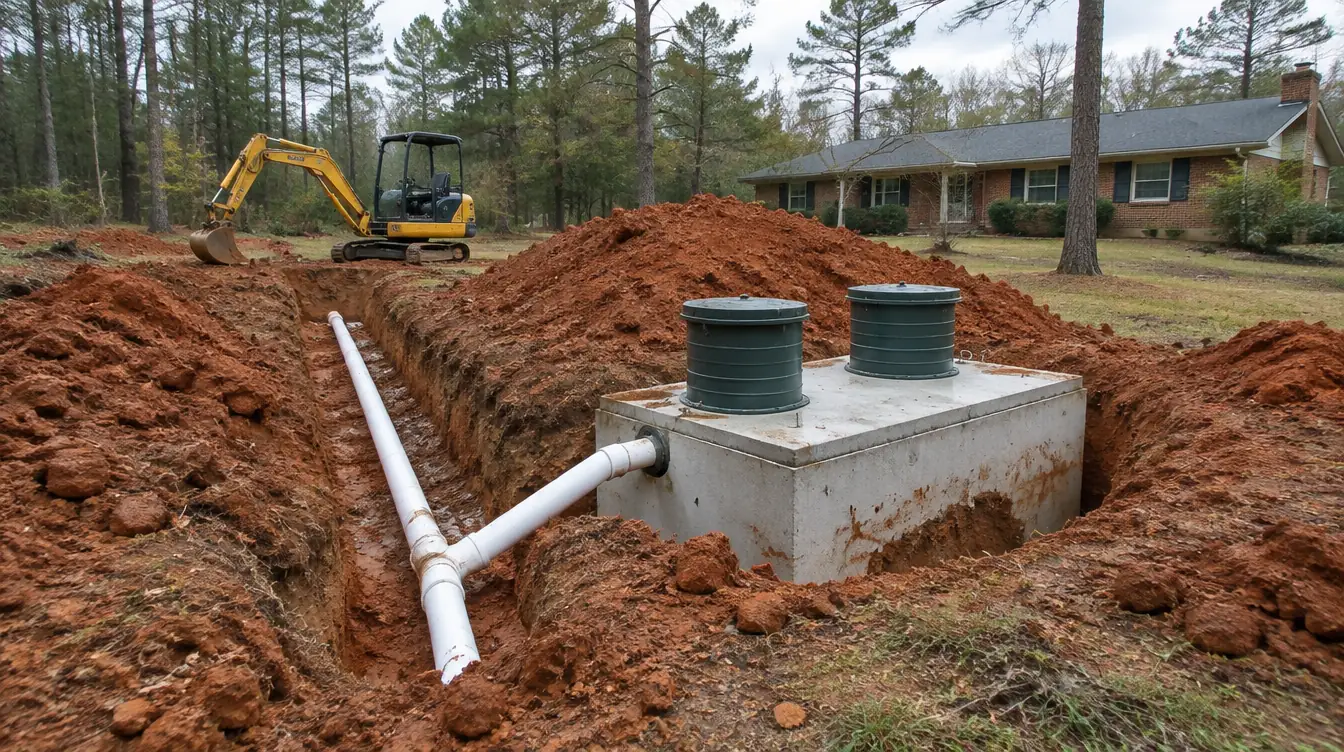
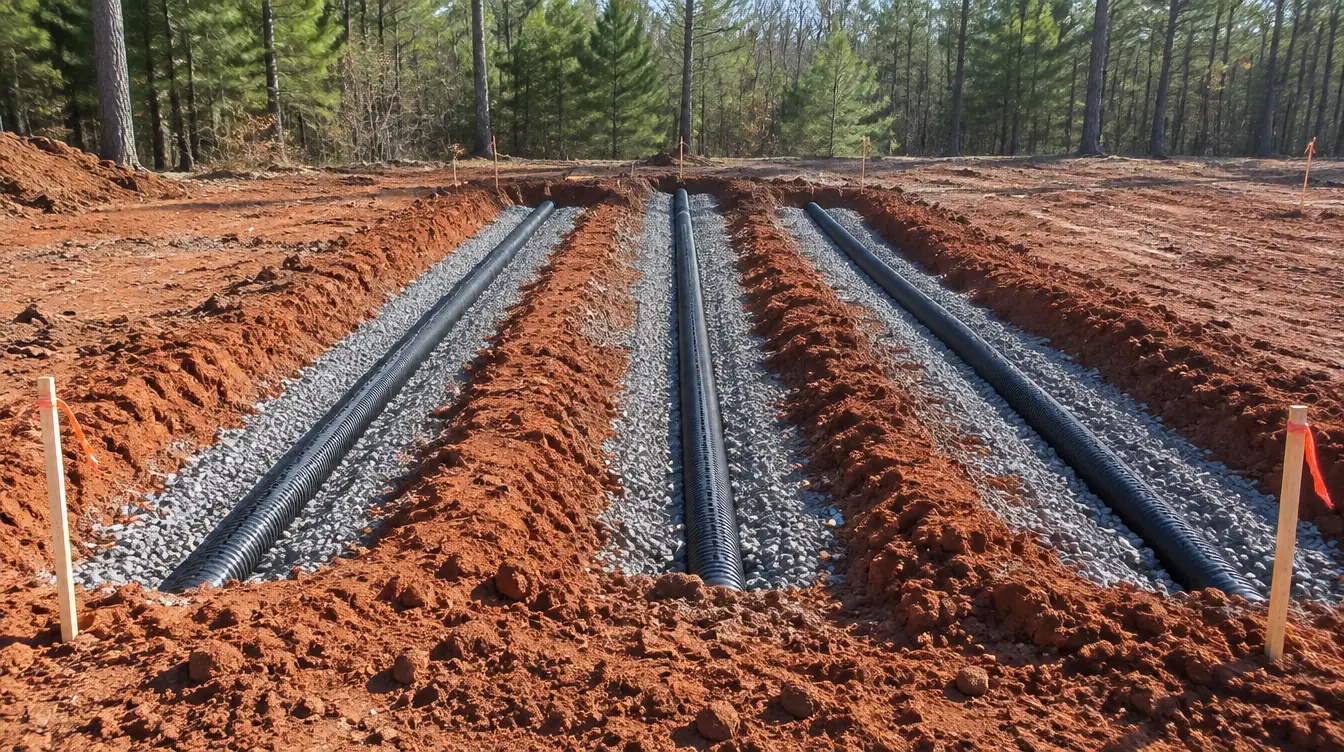
Tank set, drain field built, lines run, by an installer licensed by the state. Most installs take a few days of actual work once the crew is on site.
Inspection and approval to operate
The system is inspected before it is covered and approved for use. You need both the permit and the approval to operate; running a system without them is against state rules.
No septic permit, no building permit
On a lot without sewer, the septic permit comes first. Greenville County cannot issue a building permit until the state septic permit is issued, and no house construction can start (and no mobile home can be moved onto the lot) before then. If you are buying land to build on, the soil evaluation tells you what you can put there, so it is worth doing before you close.
The timeline nobody warns you about
In the current market, waits of several weeks for septic work in the I-85 corridor are normal, and installers book out further in the spring building rush. If you are closing on land or starting a build, start the soil evaluation early. It is the one step everything else waits on.
Why Upstate soil matters
Red clay is slow to absorb water, so the state allows a smaller daily load per square foot of drain field in clay than in sandy soil. In practice that means longer drain lines, a different layout, or an alternative system on tougher lots. The soil evaluation decides which, and the septic cost guide covers what each does to the price.
What a good installer does
Pulls the permit in your name, explains the soil results in plain language, gives you a written scope with the system type named, and talks to you about pumping schedules before they leave.
South Carolina licenses septic installers in three tiers, and only the top tier can install certain specialized systems. Ask for the license, and make sure it covers the system your permit calls for.
Building a subdivision? The 1.5-acre rule
Since January 2024, new major subdivisions in unzoned parts of Greenville County (10 or more lots) that will use septic need lots of at least 1.5 acres, and the county added stream buffers of 50 to 100 feet. A single home on an existing lot is not affected. The rule has been extended since it passed, so confirm its current status with Greenville County Planning before you plan a subdivision around it.
Who to call in Greenville County
Septic permits for Greenville County are handled by the SCDES office that serves Greenville and Spartanburg, at (864) 372-3273. Applications go through the SCDES online portal.
Questions people ask
Do I need a permit to install a septic tank in Greenville County?
Yes. Every new septic system in South Carolina needs a permit to construct and an approval to operate from SCDES. Greenville County will not issue a building permit for a home on septic until the septic permit is in hand.
Who does the soil test for a septic system?
Either SCDES staff or a licensed Professional Soil Classifier. In the Upstate the evaluation needs backhoe test pits, which you arrange. New subdivisions of 10 or more lots without utilities must use a privately hired soil classifier.
How long is a septic permit good for in South Carolina?
Five years from the date the permit to construct is issued.
How long does a septic installation take?
The install itself is usually a few days of work once the crew is on site. The wait is everything before that: the soil evaluation, the permit, and getting on an installer's schedule, which can run several weeks in the I-85 corridor.
What is the 1.5-acre septic rule in Greenville County?
In January 2024 Greenville County set a 1.5-acre minimum lot size for new major subdivisions (10 or more lots) on septic in unzoned parts of the county. It does not apply to building a single home on an existing lot. Check with Greenville County Planning for its current status.
Got land or a build coming up? Request a quote from a local installer who works your side of the county.
Request a quoteSources
We check state and county rules against the source. Rules change, so confirm with the office that issues the permit before you act.