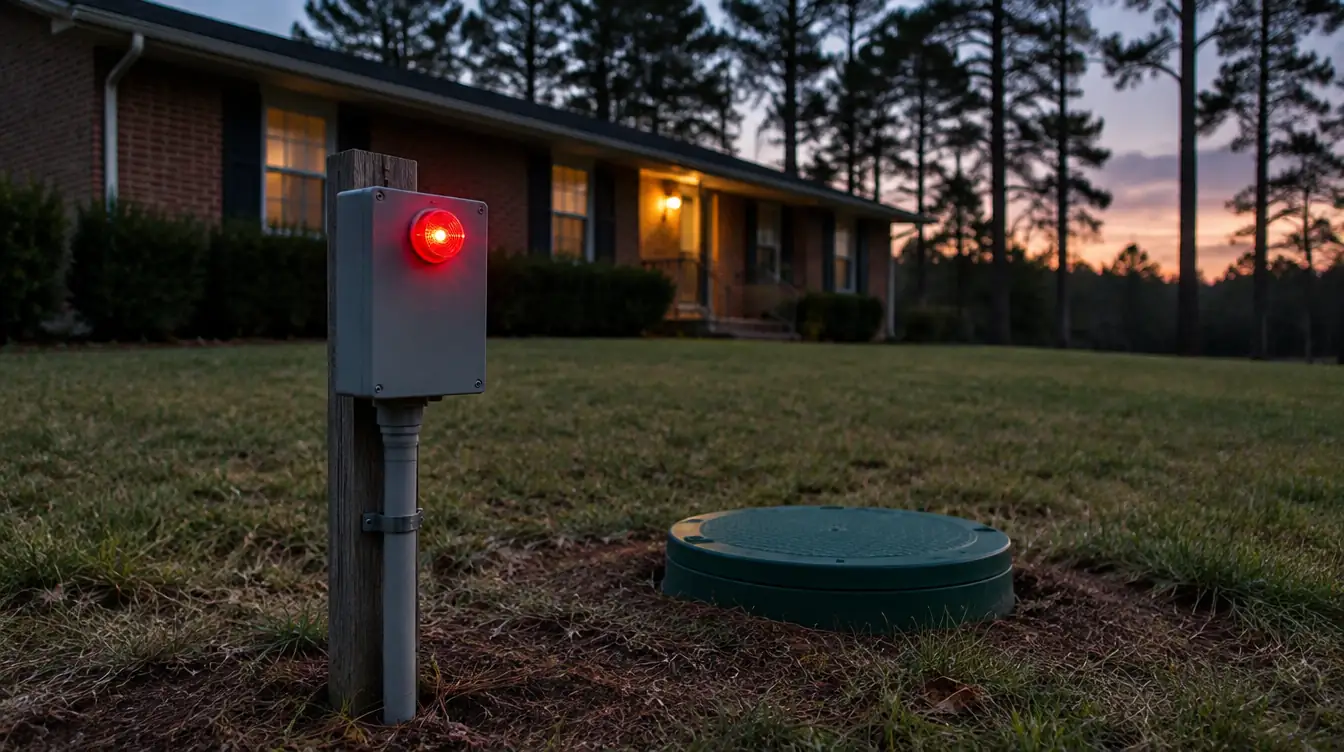
Short answer: stop using water, keep everyone away from any sewage, and do not open the tank. A septic alarm means water has risen too high in the pump tank, usually because the pump, a float switch, or the power to the pump failed. South Carolina requires that alarm on every system with a pump. Then call a licensed septic company.
Do these five things first
Stop using water
No toilets, showers, laundry, or dishwasher. Every gallon you send down the drain has nowhere to go.
Keep people and pets away from any sewage
If sewage came into the house, keep everyone out of that area. If you have to be near it, wear rubber gloves, boots, and eye protection.
Do not open or lean into the tank
Gases in a septic tank can kill. If someone collapses near or in a tank, do not go in after them: call 911 and get fresh air moving with fans.
If the ground is flooded, do not pump yet
A tank pumped while the soil is saturated can float up out of the ground. Wait until the water goes down.
Call a licensed septic company
Tell them what you are seeing and whether your system has an alarm. Or send us an urgent request.
Need someone out there? Send an urgent request and tell us what you are seeing.
Request urgent helpWhat does it mean when the septic alarm goes off?
South Carolina requires every septic system with a pump to have a separate high-water alarm you can both hear and see. It sits in the pump tank, and when the water rises past where it should be, it goes off. The usual causes are a pump that quit, a stuck float switch, or a tripped breaker or power outage to the pump.
The state also requires pump tanks to hold at least 500 gallons, partly as emergency storage for when the pump or power fails. That reserve buys you some time, not unlimited time. Cut your water use and get the system looked at.
Is it the septic tank or a clog?
One slow sink or toilet is often a clog in the house plumbing. When the lowest drains in the house (a basement drain or a first-floor shower) back up, or everything slows down at once, the tank or drain field is the more likely cause. After heavy rain, a plugged outlet in the tank is one of the first things a septic company will check.
Should you pump the tank after heavy rain or flooding?
When the ground is soaked, the drain field cannot take water, so the system backs up even if nothing is broken. SCDES says to drastically cut water use, plug basement drains, and not pour cleanup water down sinks or toilets. Do not open the tank or have it pumped until the soil dries out, because an emptied tank in saturated ground can float up. Once the water goes down, have it pumped and checked.
Cleaning up sewage inside the house
- Protect yourselfRubber gloves, boots, and goggles or a face shield. Wash anything you wore in hot water afterward.
- Throw out what soakedDrywall and insulation touched by sewage, and carpet and padding that cannot be cleaned and dried quickly, generally have to go.
- DisinfectUse a bleach solution mixed as the label directs, and keep the area out of use until it is completely dry. Never use bleach in a closed room without fresh air.
- Know when to call a proLarge backups may need professional cleanup.
Who handles what
The septic company fixes the system. The state does not pay for repairs, and if a failing system is reported, SCDES requires the owner to repair it. For questions about the rules, the SCDES office that serves Greenville County is at (864) 372-3273. If the system needs real work, our drain field repair guide covers the permit side, and the pumping and repair guide covers the everyday fixes.
Questions people ask
What does it mean when my septic alarm goes off?
In South Carolina, any septic system with a pump has to have an audible and visible high-water alarm. When it sounds, water is running high in the pump tank, usually because the pump, a float switch, or the power to the pump has failed.
Can I still flush or shower when the septic alarm is on?
Cut way back. The pump tank has some reserve space for exactly this situation, but every gallon you use fills it faster. Use as little water as you can until someone has looked at the system.
Should I pump my septic tank after heavy rain or flooding?
Not while the ground is still saturated. Both SCDES and the EPA warn that pumping a tank in flooded soil can float it out of the ground and damage the pipes. Have it pumped after the water goes down.
Is the backup coming from the tank or from a clog?
One slow fixture is often a clog in the house plumbing. When the lowest drains in the house back up, or everything slows at once, the tank or drain field is the more likely cause. After flooding, a plugged tank outlet is one of the first things to check.
Can I clean up the sewage myself?
Small amounts, carefully: gloves, boots, eye protection, and a disinfectant used as the label directs. Drywall, insulation, and carpet soaked by sewage generally have to be thrown out. Large backups may need a professional cleanup company.
Alarm on or sewage backing up? Request urgent help and tell us what you are seeing.
Request urgent helpSources
We check state and county rules against the source. Rules change, so confirm with the office that issues the permit before you act.